Yes, reaction time can improve. In most cases, the biggest change is not a single super-fast click but a better average, fewer slow attempts and more consistent performance.
The best way to train is simple: use the same setup, practise in short sessions and compare repeated results over time. For context, you can compare your baseline with average reaction time by age.
Quick answer
Yes. Most people can improve reaction time with regular practice, stable conditions and honest tracking. The clearest progress usually shows up in consistency, not in one lucky result.
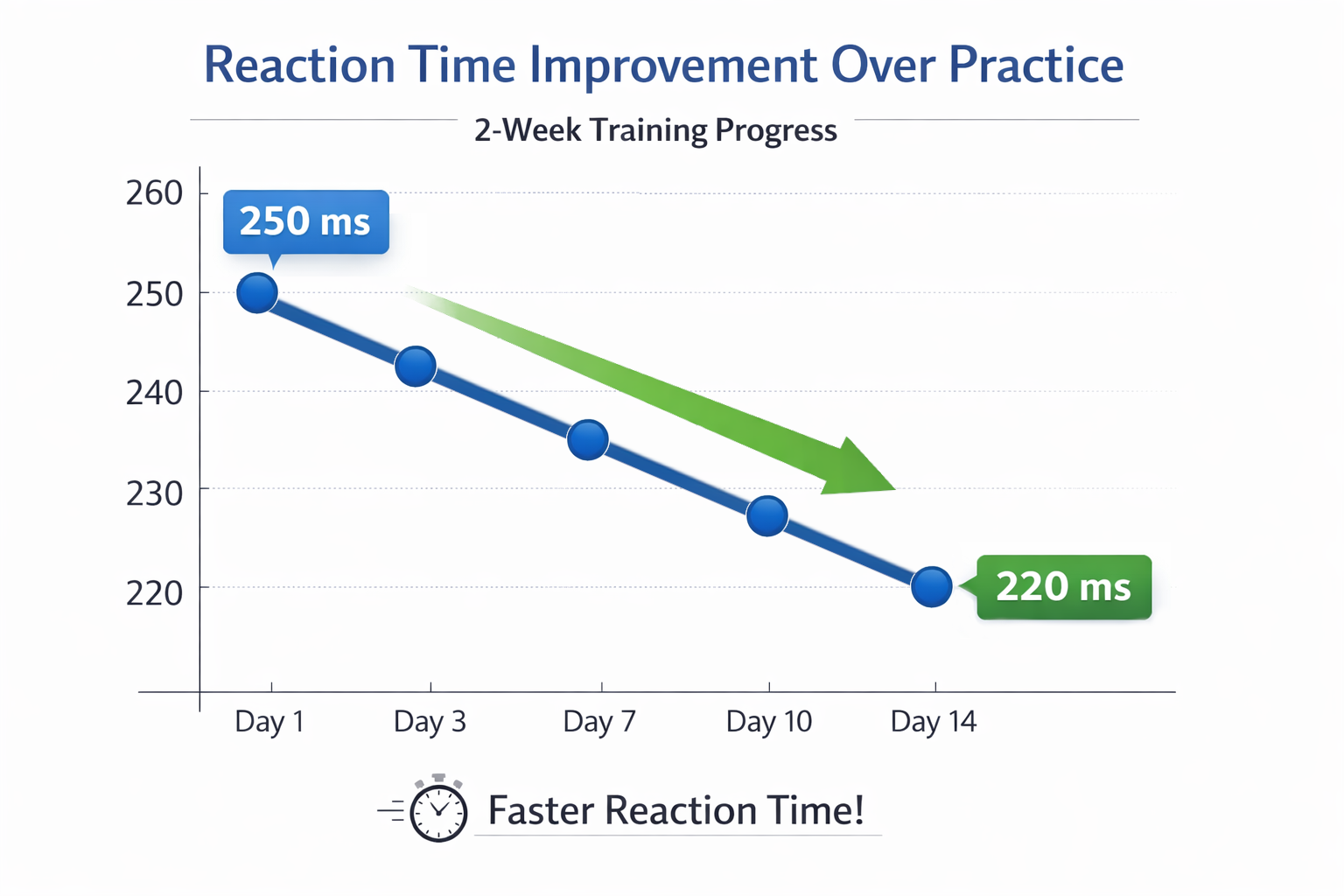
How much can reaction time improve?
For most people, improvement is measurable but not extreme. You may not change your best-ever click very much, but your average can get better and your results can become more stable.
That is why it makes more sense to track a 10-shot average than to focus on one fast attempt. If you want to judge whether 200 ms is already fast, read is 200 ms reaction time good.
A simple 2-week reaction time training plan
This plan keeps things short and comparable. Start with a baseline on Reaction-1, add more control with Reaction-2, then retest the same baseline task.
| Days | Training | What to record |
|---|---|---|
| 1–2 | Baseline on Reaction-1. Do 12–15 attempts and stop before fatigue changes your pace. | 10-shot average and your slowest attempts |
| 3–6 | 10 attempts on Reaction-1, then 8 attempts on Reaction-2. | Both averages on the same device |
| 7–10 | 8–10 attempts on Reaction-2 plus 3–4 minutes on Stroop or Flanker. | Average score and a short note about focus |
| 11–12 | 8 attempts on Reaction-2 and a short session on Stop-Signal. | Average score and whether you felt rushed |
| 13–14 | Retest your baseline with Reaction-1, then confirm with Reaction-2. | New 10-shot average vs your original baseline |
Keep the same device for the full two weeks so your results stay comparable.
Why sleep and stress matter
Sleep loss and stress usually make reaction time more inconsistent. You may still get some fast attempts, but you are more likely to produce slow ones as well.
If you want the full signal-to-action explanation, read how reaction time works.
Phone vs computer: device delay
Phone scores are often slower because touchscreens and mobile browsers add delay. For fair tracking, use the same device and browser whenever possible.
Common training mistakes
What hurts progress
Switching devices, doing very long sessions, chasing one perfect score and comparing sessions done under very different conditions.
What helps
Short sessions, repeated averages, stable conditions and tracking progress over time.
Habits that help
- Train in short sessions instead of long blocks.
- Use the same device and browser for comparison.
- Test at a similar time of day when possible.
- Prioritize sleep if you want cleaner averages.
- Track trends, not one result.
Best tests to use
Start with Reaction Test Level 1 for pure speed. Add Reaction Test Level 2 for more control. To train attention and inhibition, use Stroop, Flanker and Stop-Signal.
FAQ
Can you actually improve reaction time?
Yes. Most people can improve reaction time with regular practice, a stable setup and short sessions focused on consistency.
How long does it take to improve reaction time?
Small improvements can appear within one to three weeks, especially when you practise regularly and compare results on the same device.
What is the best way to train reaction speed?
Use short sessions, track averages instead of single attempts, and keep your device and conditions consistent.
Why does reaction time look slower on phone?
Phones often add extra delay through touch input, browser timing and display refresh, so phone and desktop scores are not directly comparable.
This article is educational and not diagnostic. Reaction time is influenced by sleep, stress, focus, practice and device delay, so fair comparison matters.