A simple visual reaction time test measures how quickly you notice a signal and respond. For many adults, typical results fall around 200–250 ms, with the fastest averages often appearing in the late teens and 20s.
Age matters, but it is not the whole story. Sleep, focus, stress, practice and device latency can all shift the result. If you want the full explanation, read how reaction time works.
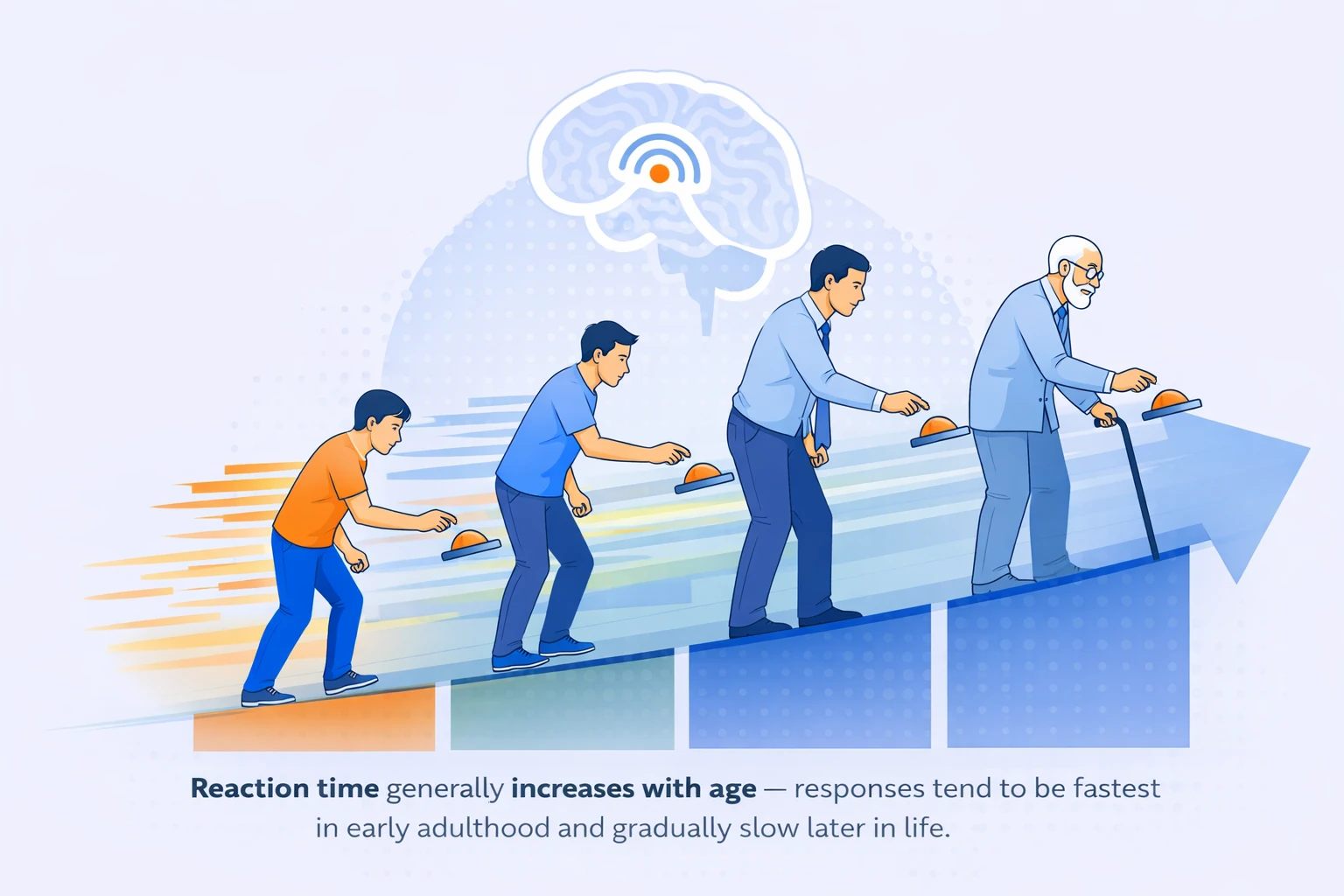
Typical reaction time by age group
Typical ranges by age
| Age group | Typical range |
|---|---|
| 10–19 | 200–240 ms |
| 20–29 | 190–220 ms |
| 30–39 | 200–235 ms |
| 40–49 | 210–250 ms |
| 50+ | 220–320 ms |
What is a good reaction time?
On desktop, around 200 ms is usually considered fast for a simple visual reaction time task. The more useful question is whether the result is repeatable. One lucky click matters less than a stable average.
For a closer look, read is 200 ms reaction time good?
What affects reaction time besides age?
Age is only one factor. Sleep quality, attention, stress, caffeine timing and practice can all change the result. Sleep in particular can have a strong effect on alertness and consistency, so it is worth reading how sleep affects memory, reaction time and brain performance.
How to compare your score fairly
Use the same device, test under similar conditions, and compare results at a similar time of day if possible. Try to keep sleep, distractions and effort level fairly consistent. For self-tracking, your 10-shot average is more useful than one unusually fast click.
How to improve reaction time
Most improvements come from better consistency and fewer slow outliers, not from hacks. Short practice sessions, better sleep and fewer distractions usually help the most.
- Sleep well and keep a stable schedule
- Reduce distractions before testing
- Practice short drills a few times per week
- Stay physically active
- Track trends on the same device
Related reading
FAQ
What is the average reaction time for adults?
For a simple visual reaction time task, many healthy adults fall around 200–250 ms. The exact number depends on age, device latency and testing conditions.
Does reaction time get slower with age?
Usually yes. Reaction time is often fastest in the late teens and 20s and then gradually slows across adulthood.
Is 200 ms a good reaction time?
Usually yes. Around 200 ms is generally considered fast for a simple visual reaction time task, especially on desktop.
Why are phone results often slower?
Phones and tablets often add extra delay through touch processing, browser timing and display refresh. That is why desktop and mobile scores are not directly comparable.
This article is educational and not diagnostic. The ranges above are practical benchmarks for a simple visual task and can shift with fatigue, stress, practice effects and device latency.