| # | Date | Time | CPM | WPM | Score | Acc. | Typed | Correct | Mistakes | Errors / 100 chars | Worst letter | Text |
|---|
What does this test measure?
This test measures typing speed, typing accuracy, and the ability to keep speed under control without letting errors rise too much. The main metrics are WPM, CPM, accuracy, and the final score, while the error stats help show whether your weak point is speed, consistency, or specific letters.
How to interpret your score
Do not judge the result by WPM alone. A high WPM with many mistakes is usually worse than a slightly lower WPM with strong accuracy. In practice, speed shows how fast you can type, accuracy shows how controlled your typing is, and score shows the balance between both.
If your WPM is decent but your score stays noticeably lower, accuracy is probably dragging the result down. If accuracy is high but WPM is low, technique and finger movement efficiency are more likely the bottleneck.
What skills can this improve?
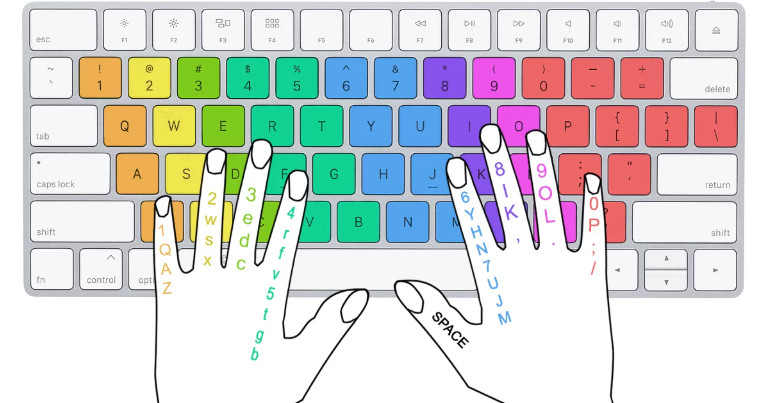
Repeated practice can improve finger movement consistency, keyboard familiarity, rhythm, and automatic letter-to-finger mapping. Touch-typing training is commonly used to improve speed while maintaining accuracy.
What affects your results
Sleep loss, mental fatigue, workstation setup, keyboard type, tactile feedback, key travel, spacing, and virtual vs physical input can all affect typing performance. Cold hands can also reduce manual dexterity and slow keyboard tasks.
Tips for reliable results
- Use both hands and keep a consistent finger placement instead of improvising key reaches.
- Try not to look at the keyboard. At first this may slow you down, but it usually helps build more automatic typing.
- Keep your wrists fairly neutral and your shoulders relaxed.
- Do short, focused runs instead of one long sloppy session.
- Do not chase speed too early. It is usually better to stabilize accuracy first and then increase pace.
FAQ
What matters more: WPM or accuracy?
Both matter, but for real improvement accuracy usually comes first. A fast result full of mistakes is less useful than slightly slower typing that stays controlled.
Can touch typing really make me faster?
Usually yes. Training built around touch typing is used specifically to improve speed while keeping accuracy stable, although the first stage may feel slower while your hands adapt.
Does keyboard type matter?
Yes. Performance can change depending on whether you type on a physical keyboard, a virtual keyboard, or keys with different travel and spacing.
Why am I slower when I stop looking at the keyboard?
That is normal at first. When you stop looking down, you rely more on learned finger mapping instead of visual searching.
Can fatigue or bad sleep affect typing?
Yes. Sleep loss and mental fatigue can reduce attention and psychomotor performance, which can show up as slower typing or more errors.
Try also
Typing speed is related to attention, motor control, and working consistency. You can also try Memory Test 3x3, Symbol Digit, or browse the blog for more articles about performance, attention, and cognitive speed.
For training and self-tracking only; not a clinical or diagnostic instrument.